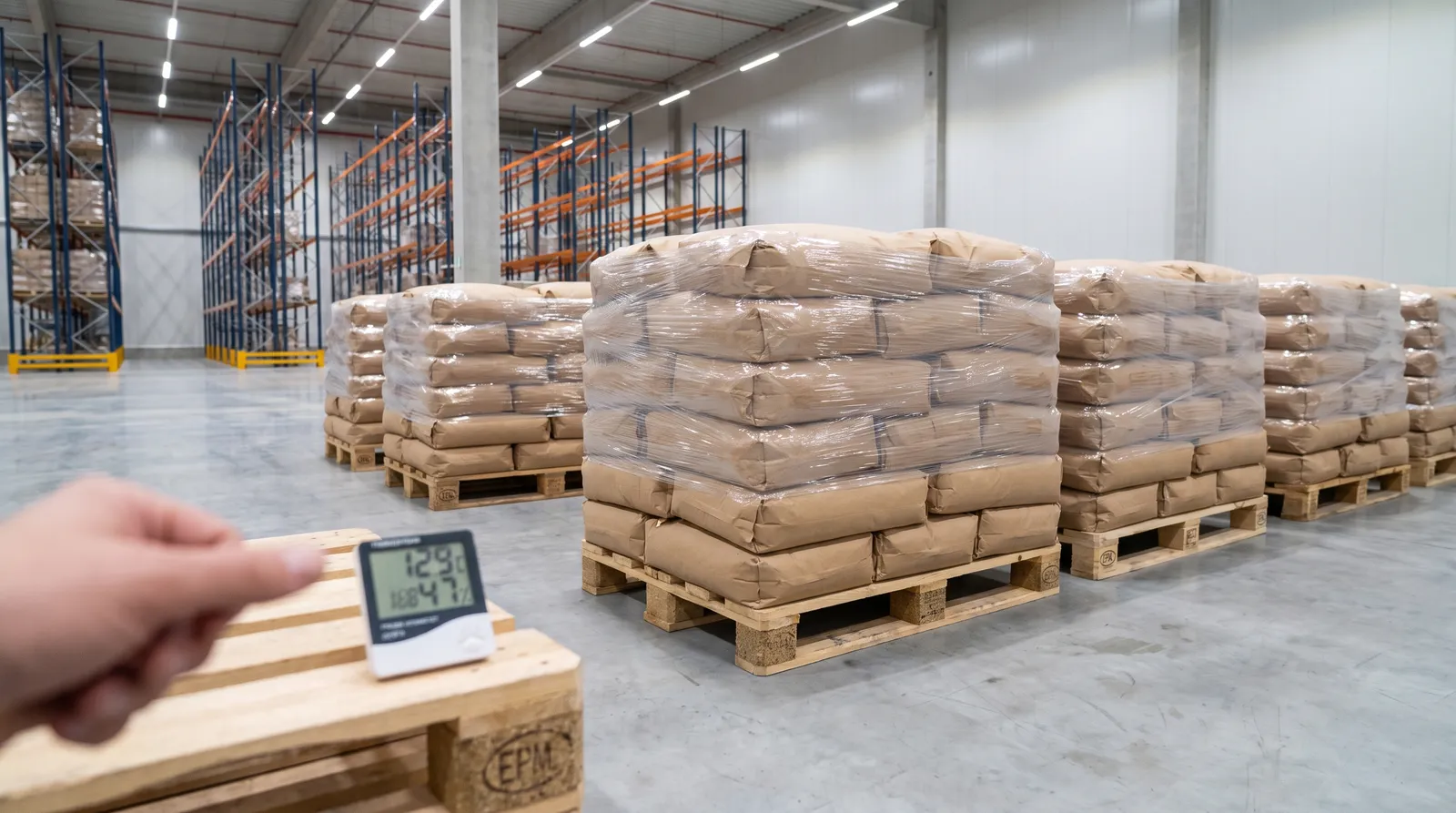
Dehydrated potato flakes are shelf-stable by design. Dried below 8% moisture, they carry too little free water for bacteria, yeasts or moulds to grow, and a properly sealed bag will hold its quality for one to two years without refrigeration. So when a lot arrives at the production line clumped, discoloured or smelling wrong, the instinct is to blame the factory — but in our experience the cause is almost always found in the warehouse, not the dryer.
The baseline: 12–24 months, below 25°C, dry
Under sensible conditions — ambient storage below 25°C, low humidity, intact packaging — flakes hold a shelf life of 12–24 months. The physics is simple: at sub-8% moisture the water activity of the product sits well below the threshold micro-organisms need, so the flakes are microbiologically inert as long as they stay dry. The moisture figure, along with colour, granulation and microbiological limits, is stated on our specification sheet and confirmed per batch on the Certificate of Analysis. Everything that follows is about protecting that starting condition.
Enemy one: moisture pickup
Flakes are hygroscopic — they were engineered to absorb water quickly, and they do not distinguish between a mixing bowl and humid warehouse air. A punctured liner or a bag left open lets the product creep back above its safe moisture level: first it clumps and flows poorly, then it becomes a genuine microbial risk. Humid port sheds and monsoon-season transit warehouses are the classic danger points, which is why the food-grade polyethylene liner inside each 25 kg kraft bag matters far more than the paper around it.
Enemy two: heat
Heat does not spoil flakes quickly, but it ages them. Sustained storage above 25°C accelerates the slow browning reactions that shift the colour from creamy white towards yellow-brown and flatten the fresh potato flavour. A container parked in the sun for a week will not fail a micro test, but a buyer running a colour spec will see the drift. Choose the cooler bay, not the one by the loading-dock doors.
Enemy three: oxygen
Potatoes carry trace lipids, and over long storage those lipids oxidise, producing the stale, cardboard-like note of rancidity. In a standard bag this takes many months to become noticeable, but for programmes that plan to hold stock towards the end of the shelf-life window we offer nitrogen flushing and oxygen-barrier liners at the packing stage — part of the controls described on our manufacturing page. For stock turned within a few months, standard packing is sufficient.
Enemy four: pests and odours
The same open structure that makes flakes rehydrate fast makes them absorb aromas from the air around them. A pallet stored beside spices, detergents, fuels or strongly scented goods will taste of its neighbours long before any lab test flags a problem. Pests are the second half of this enemy: kraft bags resist insects and rodents poorly once breached, so bait stations, intact stacks and prompt removal of damaged bags are non-negotiable.
Warehouse rules that keep flakes in spec
- Off the floor, off the walls — pallets on dunnage, a clear gap from external walls where condensation forms.
- FIFO by batch code — every bag carries a batch number; rotate stock so the oldest code ships first.
- Liner discipline — reseal partially used bags immediately; quarantine any bag with a torn liner.
- Monitor humidity — a thermo-hygrometer per bay; investigate sustained readings above roughly 65% relative humidity.
- Clean-bay separation — no spices, chemicals, detergents or odorous cargo in the same bay; routine pest control with records.
What “gone wrong” looks like on inspection
Three signs tell the story. Clumping that does not break apart under light pressure means moisture pickup. Off-colour — grey, brown or strongly yellowed flakes against a creamy white reference — points to heat or age. An off-odour, whether stale, rancid or simply foreign, means oxidation or aroma absorption. In each case the per-batch Certificate of Analysis gives you the reference values the lot left the factory with, so the comparison is objective rather than an argument.
If you are planning storage for an annual programme — or investigating a lot that has drifted — we are happy to help. Send us your storage conditions and volumes and we will advise on packing options and realistic shelf life for your climate, or start with the FAQ for the common questions on packaging and shelf life.