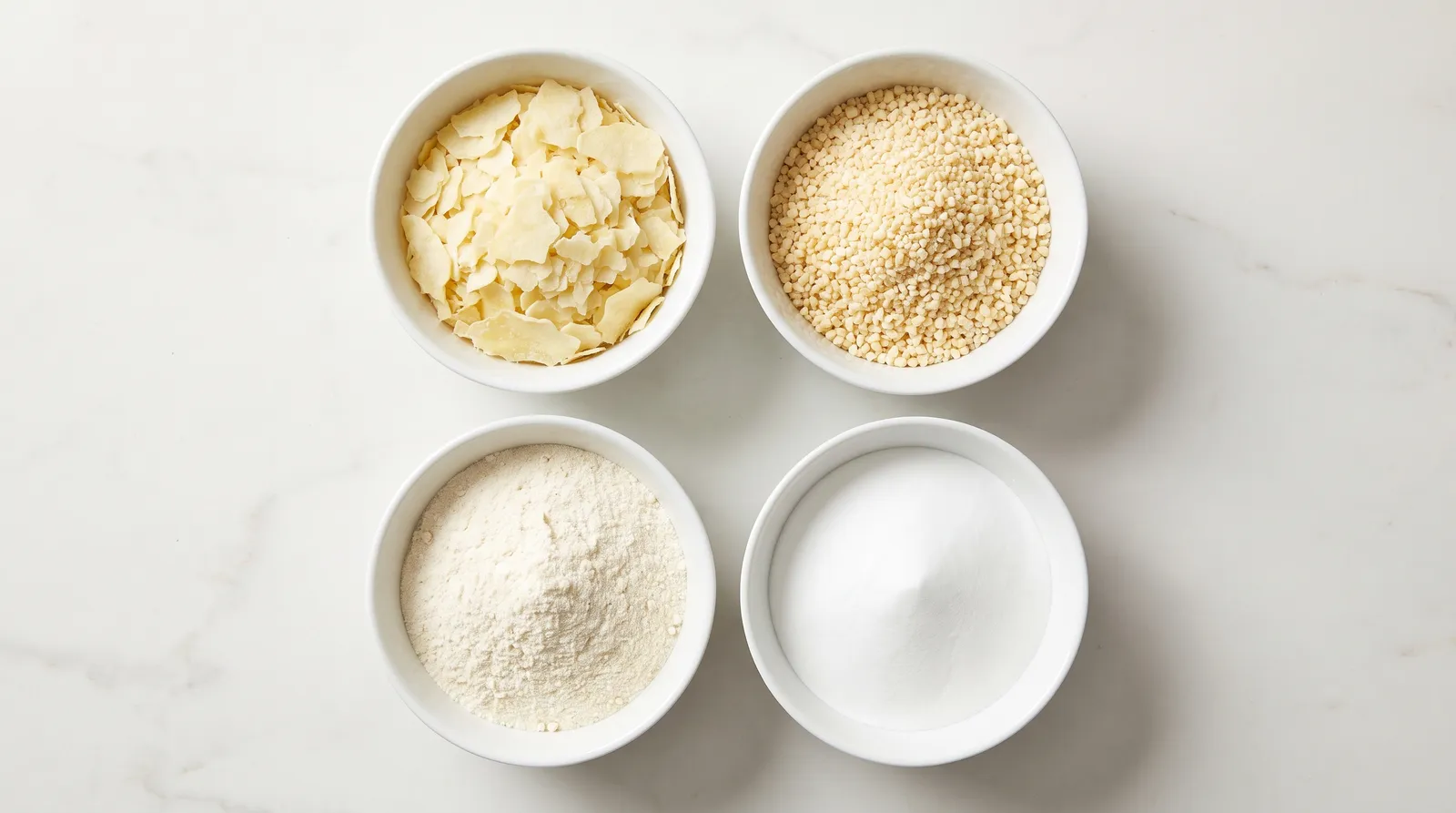
Flakes, granules, powder and starch all begin as potatoes, but they are made differently, behave differently, and are rarely interchangeable in a recipe. Choosing the wrong one is an expensive way to discover the difference — so here is the practical comparison.
The four ingredients at a glance
| Ingredient | How it’s made | Typical use |
|---|---|---|
| Flakes | Cooked mash dried in a thin film on a steam-heated drum, broken into flakes | Instant mash, snack pellets, extruded snacks, soups, bakery, ready meals |
| Granules | Cooked potato dried in an add-back process into fine, dense particles | High-volume instant mash, dough binding where low water uptake speed is fine |
| Powder | Flakes or dried potato milled to a fine flour | Coatings, batters, gravies, seasoning bases, extrusion blends |
| Starch | Starch washed out of raw potato cells, refined and dried — no cooked potato flavour | Thickening, moisture binding, crispness in coatings, clean-label texturiser |
Flakes vs granules: the mash question
Both reconstitute into mashed potato, but not identically. Drum-dried flakes keep more intact cooked cells, so they rehydrate fast into a fluffier, more potato-like texture — the reason flakes dominate retail instant mash and food-service kitchens. Granules are denser: more servings per silo, cheaper to ship per kilo of finished mash, but with a texture many product developers describe as heavier. If eating quality leads your spec, start with flakes; if bulk logistics lead it, evaluate granules.
Flakes vs powder: structure vs surface
Powder is essentially flake with the structure milled away. That is not a downgrade — it is a different tool. Snack doughs and coating systems often want the fast, even hydration of a fine powder, while a soup that should show visible potato pieces wants flake. Many manufacturers buy flake and mill in-house; customised granulation from the supplier, which we offer as part of our product range, removes that step.
Starch is not a substitute
Potato starch contains no cooked potato solids — no flavour, no colour, no mash texture. It thickens, binds moisture and crisps coatings superbly, but it cannot make mashed potato, and flakes cannot match its thickening power. Plenty of products use both: flake for body and flavour, starch for water control.
How to decide
- Instant mash or visible potato texture → flakes.
- Maximum solids density in logistics → granules, after a texture trial.
- Even hydration in doughs, batters, blends → powder (or custom-ground flake).
- Thickening, binding, crisping only → starch.
Still unsure? Send us your application and target texture — we’ll advise which grade fits and provide samples. Typical flake parameters are on the specifications page, and common buyer questions are answered in the FAQ.